

It checks geometry
Stretcher width and header height, within ±1 mm, plus flatness and straight edges.
Home / Solutions / QuatroCBC
QuatroCBC watches clay brick at forming, after drying and at packing. It measures geometry to ±1 mm, finds webs, cracks and inclusions from 5 mm, and compares engobe and shade with a reference, so a bad unit is stopped before the kiln.
IN PLAIN WORDS
An inspector for an extrusion brick line. On the wet side it checks the bar, the webs, the engobe and the rustication. After drying it sees every face and can drop the reject. At packing it checks the fired brick before it is banded.
Stretcher width and header height, within ±1 mm, plus flatness and straight edges.
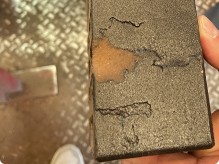
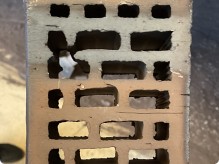
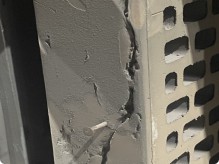
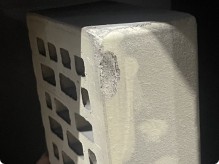
Missing or cut webs, cracks, chips and inclusions from 5 mm, on the wet bar and on the dried brick.
Engobe coverage, rustication depth and shade, compared with a reference stored for that product.
HOW IT WORKS
The useful catch is early, while the brick can still be stopped or returned to the mix. Packing is the last look before the band.
See it on your lineThe cut bar is checked at the end: webs, geometry, engobe and rustication depth. A bad run can stop the conveyor.
Every face of the dried brick is inspected. A reject can be dropped off the line before the kiln car.
Fired brick is checked again for cracks, chips and contamination before it is packed.
Each brick keeps its photo, measurements and verdict. Shift and batch reports show where time and material went.
BENEFITS OF IMPLEMENTATION
Face brick is sold on appearance. The system protects that appearance — and the cost of getting it wrong.
Automatic colour classification keeps packs uniform, ending the most common reason for face-brick returns.
Dimension control within ±1 mm catches a warped or off-size brick before it is banded, and earlier, before the kiln.
Cracks, chips, broken webs and inclusions are flagged on the wet side and after drying, so the kiln is not filled with brick that should have been stopped.
Accurate sorting means fewer first-grade bricks downgraded by a cautious manual eye — and fewer seconds slipping into first-grade packs.
Defect types, shade distribution, shift output and downtime — recorded for every batch.
Consistent packs mean fewer rejected deliveries and a stronger reputation on shade-critical projects.
WHAT IT DETECTS
From the pressed blank to the finished brick. Tuned to your product and grade standard.

GET IN TOUCH
Send us your line details and we’ll arrange a tailored presentation and a live demo of the system inspecting a product like yours.