
Machine Vision for Concrete Products: Why Production-Specific Setup Matters
Automated quality control starts with understanding the product and the production line. Concrete blocks and paving stones differ in geometry, surface texture and colour. Their inspection needs to reflect those characteristics and the manufacturer’s quality requirements.
QuatroPBC combines machine vision and laser measurement to inspect concrete products after the press. Configuring the system for a particular line connects its measurements and defect detection with the decisions the production team needs to make.
Why installation is only the beginning
Positioning cameras and measurement equipment establishes an inspection point. The next task is to verify how the system evaluates the products passing through it.
This includes reviewing inspection results, examining borderline examples with production specialists and confirming the criteria used to identify unacceptable deviations.
A configuration becomes useful when the team understands what the system checks, how it presents findings and which results require action.
Defining acceptable product variation
Concrete products do not all have the same appearance. A deliberately textured paving stone requires different assessment criteria from a product designed to have a smooth surface. Colour variation may be intentional within one range and undesirable within another.
Before validating inspection, the team should establish a representative set of examples:
- Products that meet the specification.
- Acceptable variations in surface texture and colour.
- Confirmed defects that require action.
- Borderline cases that need specialist assessment.
These examples give production and implementation teams a common reference. They help distinguish an intended product characteristic from a manufacturing defect.
The objective is consistent application of the agreed quality requirements. Changes to acceptance criteria should remain documented quality decisions.
Checking performance under representative conditions
A single image of an obvious defect provides limited evidence of how inspection will work during production.
A practical evaluation should include normal products, acceptable variation and known defects. Where relevant, it should also cover different pallet layouts and operating conditions.
Disagreements are particularly useful during this stage. If the system flags an acceptable product or misses a confirmed defect, the team should examine the example, the inspection conditions and the applicable criterion.
Reviewing these cases helps identify what needs adjustment and provides a clearer basis for accepting the configuration.
Making inspection results useful to the operator
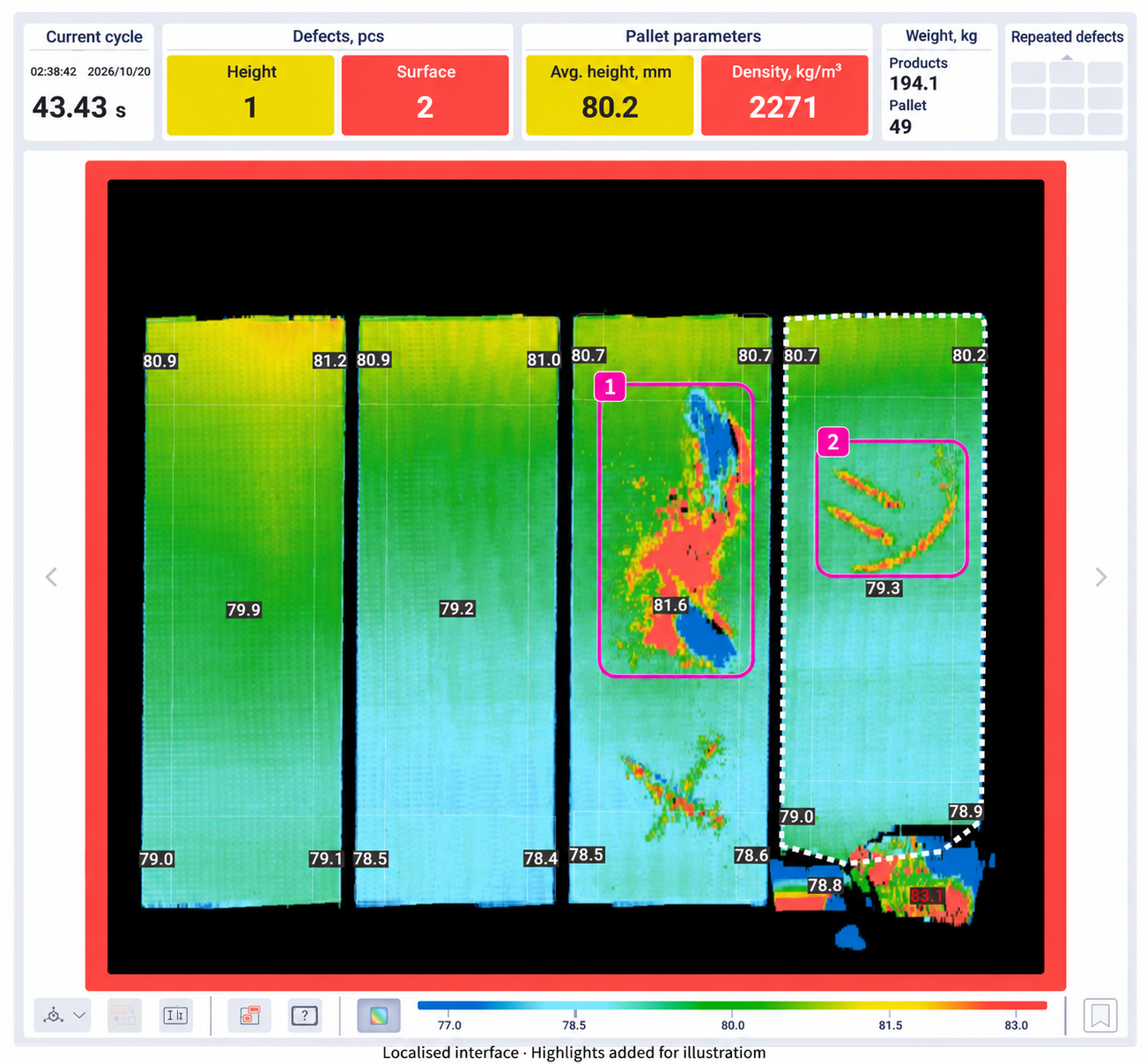
QuatroPBC photographs and laser-scans products in the production flow. Its interface presents inspection findings to the operator, while recorded results contribute to batch and shift reporting.
Depending on the supplied configuration, inspection can cover surface defects, height deviations and colour variation.
The production team also needs a clear response procedure. Who reviews a finding? Which results require immediate attention? When should a repeated deviation be referred to the process engineer or quality team?
Answering these questions during implementation helps turn inspection data into practical information for the factory floor.
Reviewing the setup when production changes
A verified configuration should remain associated with the products and conditions for which it was checked.
A new mould, surface finish or product range can introduce characteristics that were absent during the original evaluation. These changes provide a reason to review whether the existing inspection setup remains appropriate.
A useful changeover check compares representative results with the current product requirements and records any adjustments. This helps preserve a clear connection between the configuration and the products being manufactured.
How production specialists contribute
Operators, process engineers and quality specialists bring different knowledge to implementation.
Operators understand everyday line behaviour and the actions available during production. Process engineers investigate relationships between materials, machine settings and product results. Quality specialists define acceptance requirements and verify compliance.
Their involvement helps resolve borderline cases and establish a response process that fits the plant’s operations.
Frequently asked questions
Can QuatroPBC inspect different concrete products?
QuatroPBC is intended for concrete blocks, paving stones, kerbs and slabs. Suitability should be assessed using product dimensions, pallet layout, line speed and the proposed inspection point.
Does production-specific setup mean relaxing quality requirements?
No. It helps the system assess the actual product against agreed requirements. Any change to those requirements should be reviewed and documented by the responsible specialists.
Should inspection be reviewed after a product change?
A change in geometry, surface finish, colour or pallet arrangement is a reason to check whether the current configuration remains suitable.
What should be agreed before routine operation?
The inspection scope, acceptance criteria, representative verification examples and responsibilities for responding to findings should be clear.
Effective machine vision inspection depends on a defined product specification, a verified configuration and an established response to the results. Together, these provide a practical foundation for automated quality control in concrete production.
All news