
QuatroIDA: Understanding Vibration and Compaction in Concrete Production
QuatroIDA is a diagnostic and process-monitoring system for concrete block and paving stone production. It combines vibrating-table acceleration, tamper-head position and available hydraulic pressure measurements to help engineers investigate machine behaviour and evaluate the duration of the main vibration stage.
For manufacturers, this creates a practical connection between machine settings and the process actually taking place during forming. Measurements help identify changes, compare operating conditions and assess adjustments against product quality requirements.
Why machine settings do not tell the whole story
A familiar recipe does not always produce identical forming conditions. Changes in concrete mix moisture, aggregate grading, machine supports or mechanical clearances can affect how the press behaves.
The frequency selected on the control panel describes an operating setting. Measurements from the table show its response. Observing both gives production and maintenance teams a clearer basis for investigating inconsistent results. They can examine what happened during forming instead of relying solely on a visible defect.
Measuring vibration across the table
QuatroIDA uses accelerometers at four corners of the vibrating table to record vibration in three axes. These measurements allow engineers to compare vertical acceleration with horizontal components and examine differences between measurement points.
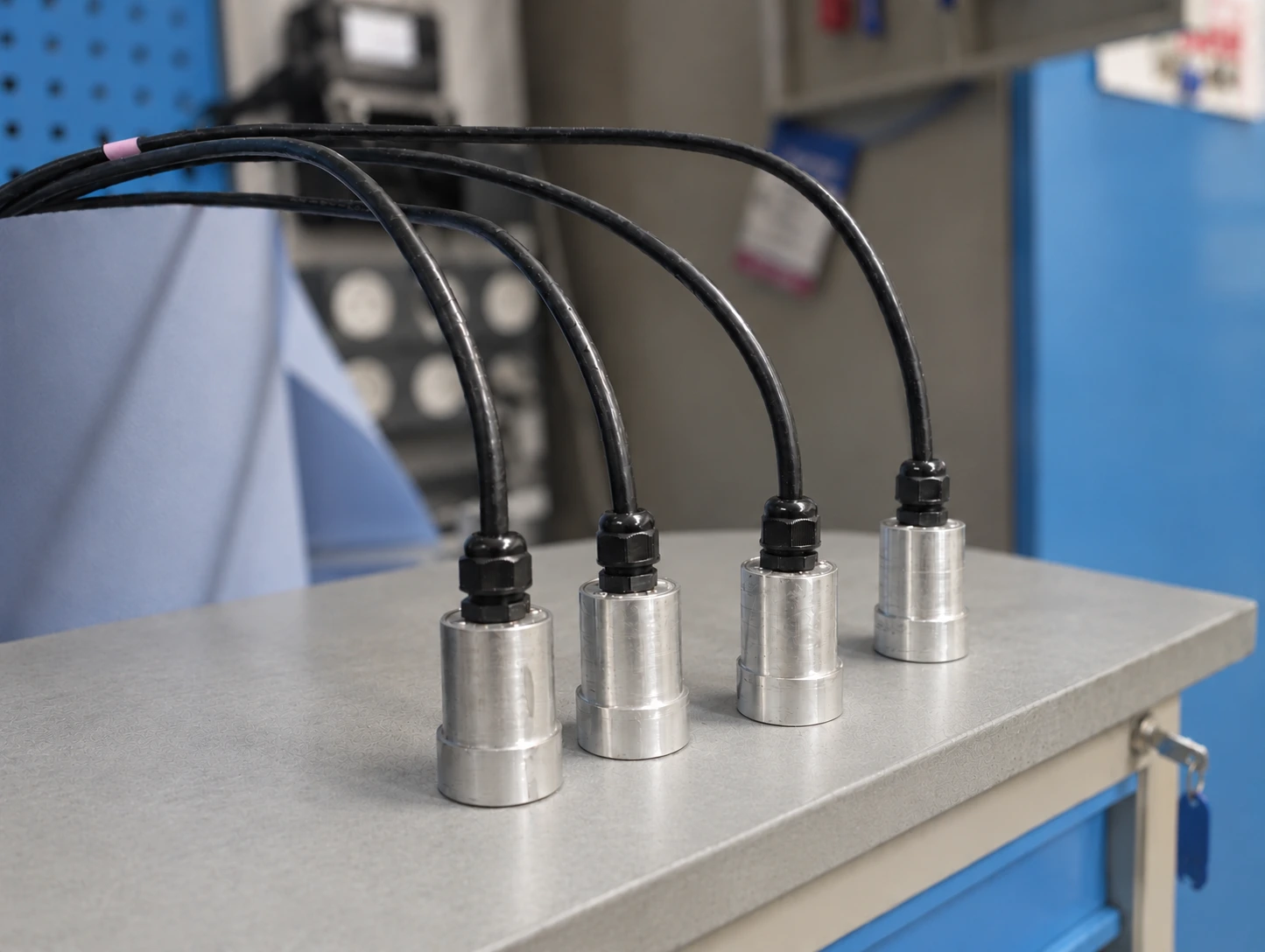
One useful indicator is RMS (root-mean-square) acceleration: a summary of vibration acceleration over a selected time window. Comparing RMS values across the corners helps reveal differences that deserve investigation. RMS acceleration describes motion; it is not a direct measurement of pressing force or product density.
Equal readings at every corner are not automatically the correct target. A machine can have a repeatable, acceptable asymmetry. Comparisons are more useful when they refer to a confirmed baseline for that particular table and consistent test conditions.
Changes can guide checks of supports, fasteners, clearances and load distribution. Measurements support the investigation; identifying the mechanical cause still requires technical assessment.
Making maintenance checks comparable
A repeatable diagnostic procedure makes it easier to compare table behaviour before and after maintenance. QuatroIDA’s TableCheck function provides a guided workflow and presents corner measurements alongside diagnostic indicators. Recorded results help teams follow changes over time and assess whether an intervention has restored the expected behaviour.
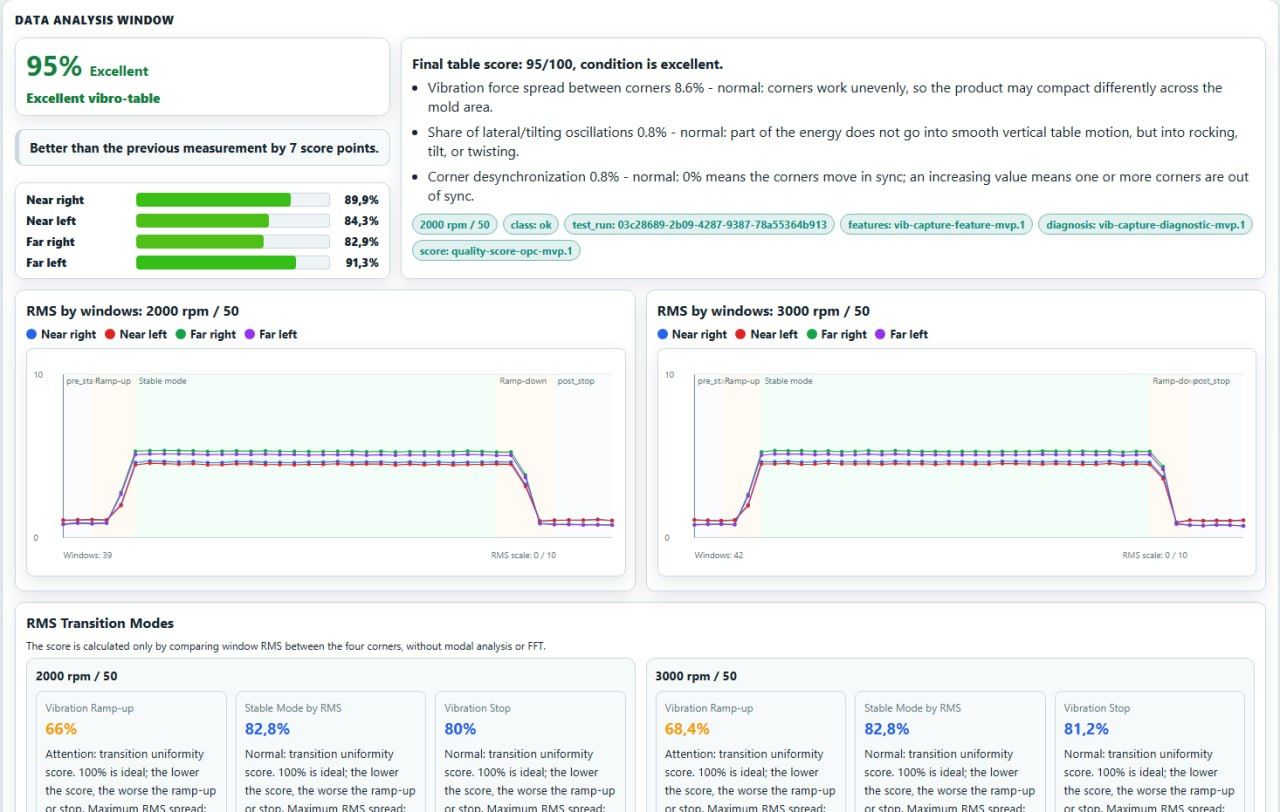
For useful comparisons, the table preparation, test mode and measurement conditions must remain consistent. Diagnostic procedures should follow the requirements of the specific machine.
What the tamper-head curve reveals
During forming, the tamper head descends as the concrete mix compacts. Its movement generally slows as the forming stage progresses. A flatter section of the descent curve can identify an interval worth examining: vibration continues while additional downward movement becomes small.
QuatroIDA’s Plato function helps investigate this interval by considering the tamper-head curve together with vibration and available pressure measurements.
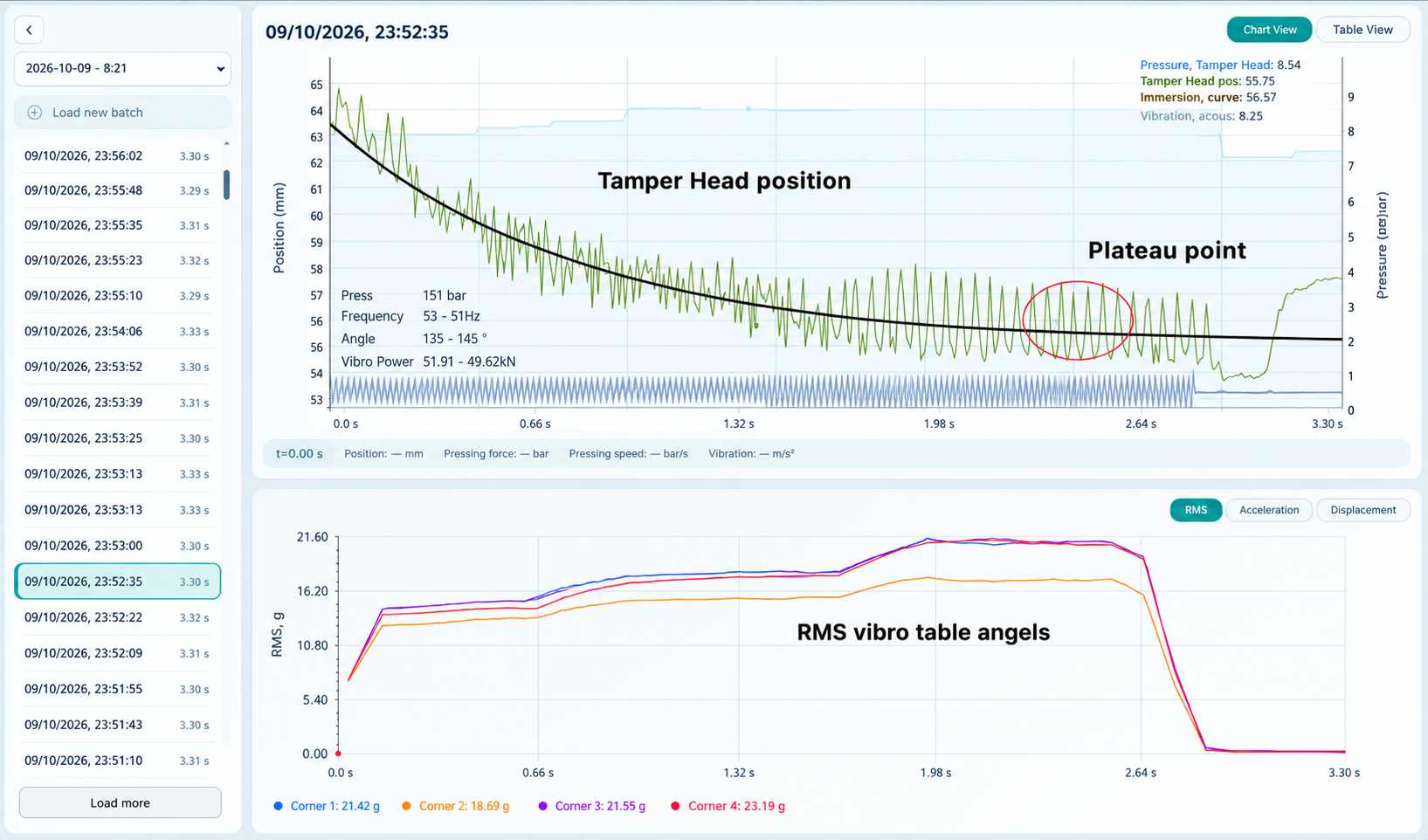
A plateau is a signal for further evaluation. It does not establish, on its own, that the product has achieved the required density, geometry or strength.
Evaluating shorter vibration time
The objective is to establish a vibration duration that consistently produces acceptable products. A controlled evaluation starts with a stable baseline and comparable operating conditions. Engineers review several recordings, identify a candidate interval and test small adjustments.
The assessment should include green-product geometry and visible defects, together with the required checks after curing. Any confirmed setting should remain associated with the relevant mix, product, mould and machine conditions.
Reducing one forming stage may shorten the overall cycle, but the effect on accepted output also depends on the rest of the production line.
Connecting process measurements with product inspection
QuatroIDA and QuatroPBC provide complementary information. QuatroIDA helps explain how the machine behaved during forming. QuatroPBC provides product inspection data that can help assess the results of process changes.
Reviewing these measurements together supports a more complete investigation: what changed in the forming process, and how did the products respond?
Frequently asked questions
Does a plateau mean vibration can stop immediately?
No. It identifies a candidate interval for controlled testing. The final setting must be verified against the product’s quality requirements.
Does higher RMS acceleration mean better compaction?
No. RMS describes vibration acceleration. Product quality depends on the interaction of vibration, pressure, mix properties, tooling and other operating conditions.
Can the same vibration time be used for every product?
A setting should be validated for the relevant product and production conditions. A successful adjustment on one recipe does not establish a universal setting.
QuatroIDA gives production and maintenance teams a measurement basis for evaluating these decisions, documenting confirmed settings and investigating changes in machine behaviour.
All news